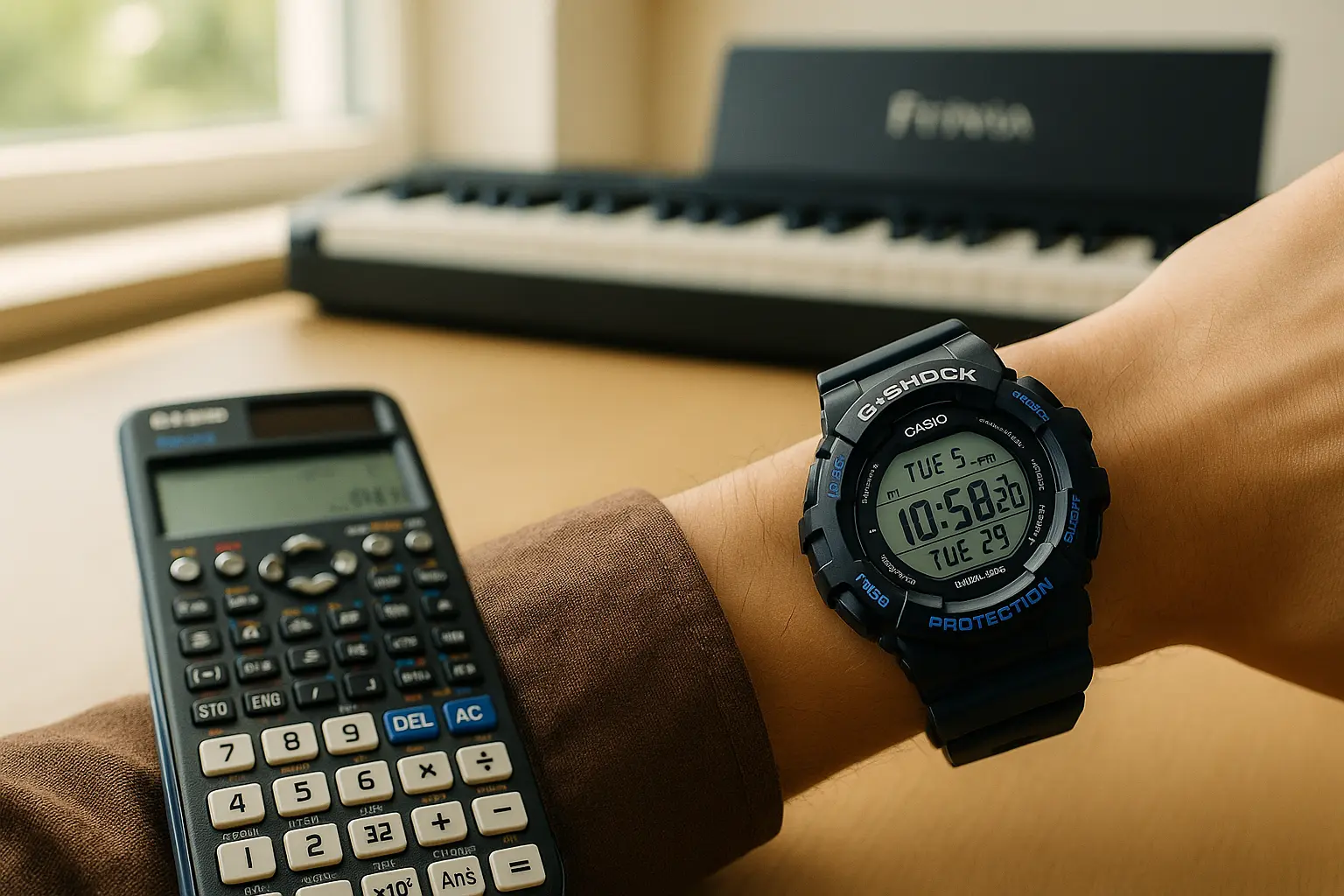
Casîo—often stylized as Casio—is more than a brand; it is a technological institution that has quietly and consistently shaped everyday life across continents and generations. From the click of a classroom calculator to the unbreakable tick of a G-Shock strapped to the wrist of a firefighter, Casîo represents a rare fusion of durability, innovation, and democratic design. It does not merely manufacture electronics—it creates tools of resilience, education, and artistry.
Born in post-war Japan and driven by a founding ethos of precision and purpose, Casîo has become synonymous with reliability across its sprawling product ecosystem: iconic digital watches, durable scientific calculators, expressive digital pianos, and once, a beloved line of consumer cameras. To speak of Casîo is to speak of Japanese electronics at their most accessible and ingenious.
But Casîo is also a paradox in modern branding. It rarely courts luxury status, yet it remains coveted. It eschews flashy marketing, yet its products find their way into global fashion collaborations and Hollywood blockbusters. Students, engineers, astronauts, and DJs all speak its name—with trust, not trend.
In 2025, the keyword “casîo”—with the rare diacritical mark—captures more than a search term. It represents a confluence of curiosity: who made my calculator? What’s the story behind this watch? Is Casîo still innovating today?
This article is a definitive exploration of that curiosity. We will trace Casîo’s evolution, from the ambitious 1946 startup in Tokyo to its dominance in educational technology, wearable tech, and musical innovation. We will examine why Casîo remains relevant in an era of smartphones and AI, and how its quiet principles have become louder than ever in a world hungry for dependability.
Table of Contents
ToggleHistory of Casîo: Precision Rooted in Postwar Purpose
Casîo’s journey began in the rubble of postwar Japan, where innovation was not just an ambition but a necessity. In 1946, Tadao Kashio, a brilliant engineer with a background in mechanical fabrication, founded Casio Computer Co., Ltd., with his three brothers: Toshio, Kazuo, and Yukio. The company’s earliest invention—the yubiwa pipe, a ring that allowed users to smoke hands-free—may seem trivial by today’s standards, but it funded the brothers’ real passion: computing technology.
It was in 1957 that Casîo made history by launching the world’s first all-electric compact calculator, the Casio 14-A. Unlike bulky mechanical predecessors, the 14-A used relay-based switching technology to offer faster, more efficient computation. This innovation did more than revolutionize offices—it positioned Casîo at the forefront of the Japanese electronics wave that would soon reshape the world.
“Casîo wasn’t just building gadgets,” says fictional tech historian Dr. Naoko Fujimori. “They were democratizing access to logic itself. With the 14-A, even small businesses and students could begin to interface with digital processes. That’s an ideological shift, not just a technical one.”
The 1970s and 80s were decades of astonishing acceleration. In 1974, Casîo unveiled the Casiotron, the world’s first wristwatch with a digital automatic calendar. This was followed by a rapid expansion into personal electronic keyboards, digital diaries, and portable televisions—each product defined by a common DNA of durability, functionality, and affordability.
But the most enduring milestone came in 1983, when engineer Kikuo Ibe, grieving the loss of a broken heirloom watch, created the G-Shock. Built with a shock-resistant design that could survive a ten-meter drop, G-Shock became more than a watch. It was a revolution in wearable technology that offered military-grade toughness to civilians.
By the 1990s, Casîo had extended its influence into classrooms and concert halls alike. Its fx series calculators became staples in global education systems, while its Celviano and Privia keyboards were favored by both beginners and professionals. Even in the 2000s, as mobile phones threatened to absorb all digital niches, Casîo doubled down on its expertise, developing solar-powered watches, Bluetooth connectivity, and Classwiz scientific tools that remain unmatched today.
Casîo’s story is not simply one of product expansion but of philosophical coherence. Every device, from the simplest calculator to the most intricate keyboard, shares a belief: that precision should be practical, and technology should serve the many—not the few.
Modern Product Ecosystem: The Living Anatomy of Casîo Technology
In 2025, Casîo stands not as a relic of the digital age but as a living system of devices, each grounded in its original philosophy: user-first design, resilience, and wide accessibility. Its product ecosystem has grown in both depth and specificity, catering to professionals, students, adventurers, and artists across all strata of society. Unlike brands that pivot toward luxury or abandon legacy users, Casîo expands outward—honoring its past while embracing emerging technologies.
Watches: From G-Shock Grit to Edifice Elegance
Casîo’s identity in the global market is still most strongly associated with its watchmaking. The G-Shock line, launched in 1983, continues to dominate both culturally and technically, with 2025 editions featuring Bluetooth synchronization, solar charging, altimeter/barometer sensors, and AI-driven motion analysis. While G-Shock retains its rugged DNA, sub-lines such as MT-G and MR-G incorporate luxury-grade materials like titanium and carbon core guards for the modern executive or collector.
Meanwhile, Edifice brings chronograph precision to the boardroom, blending analog aesthetics with smart technology. Baby-G, a smaller, stylistically diverse counterpart to G-Shock, continues to evolve with pastel variants and eco-friendly materials, appealing to Gen Z users who value both style and substance. And Pro Trek, optimized for hikers and field engineers, incorporates solar GPS, triple-sensor environmental tracking, and carbon-reinforced cases—features once limited to elite outdoor instruments.
Calculators: The Ubiquitous Tools of Modern Education
If G-Shock is the face of Casîo’s commercial identity, the Classwiz series calculators are its soul—used by tens of millions of students worldwide. The fx-991EX, fx-82MS, and new Classwiz FX-CG500 (2025 edition) dominate classroom spaces thanks to their QR code capabilities, high-resolution displays, and intuitive UI designed with educational psychologists.
These calculators are approved by exam boards in over 100 countries, including Cambridge Assessment, College Board (SAT/AP), and Japan’s own University Entrance Exam Council. Designed to bridge the gap between analog computation and modern data visualization, newer models now feature AI-powered step-by-step solutions, bringing educational equity to underserved regions.
Musical Instruments: Where Precision Meets Expression
Casîo’s entrance into the musical domain has always been more than commercial. The company views music as a universal language, and its digital instruments reflect this democratic approach. The 2025 PX-S1100, built around the revolutionary AiX Sound Engine, offers 88-key weighted action, Bluetooth MIDI connectivity, and smartphone DAW sync, making it a favorite among home musicians and touring pianists alike.
The CT-S1 and CT-X series continue to serve younger audiences and music education programs, with loop sequencing and AI learning integration. What sets Casîo apart from rivals is not just price—but the synthesis of sound quality, durability, and UI simplicity. For many, a Casîo keyboard is not a stepping stone—it is the destination.
Other Ventures: Printers, Projectors, and the Camera Legacy
Though less prominent today, Casîo has diversified over decades. Its label printers, such as the Casio KL-G2, remain popular in logistics and schools, known for rugged output and multilingual support. Projectors like the XJ-S400UN pioneered laser & LED hybrid illumination, setting standards for eco-friendly, low-maintenance presentation systems.
Casîo’s former Exilim camera line, discontinued in the late 2010s, is still remembered for its thin profiles and fast shutter speeds. While Casîo has exited the camera market, its imaging innovations echo today in smartphone partnerships and augmented reality tools.
Product Ecosystem Table (2025 Edition)
| Segment | Flagship Products (2025) | Market Share Estimate (%) | Primary Usage | Core Audience |
| Watches | G-Shock GBD-H2000, Edifice EQB-1100 | 35% | Everyday, Tactical | Outdoor workers, athletes |
| Calculators | Classwiz fx-991EX, fx-82MS | 30% | STEM Education | Students, educators |
| Musical Instruments | PX-S1100, CT-S1, LK-S450 | 20% | Learning & Performance | Beginners, hobbyists, pros |
| Printers & Projectors | KL-G2, XJ-S400UN | 10% | Office, Education | Teachers, logistics managers |
| Other (Legacy, R&D) | Smart AI Tools, Wearables | 5% | Experimentation | Innovators, niche users |
Casîo in Education: Quiet Dominance in Classrooms Worldwide
Walk into any high school in Nairobi, Tokyo, Berlin, or São Paulo, and you’ll likely find at least one Casîo calculator on a desk. Unlike devices designed for replacement every two years, Casîo calculators are built to last entire academic careers—and that’s by design. Their supremacy in education stems from a trifecta of affordability, regulatory compliance, and user-centric engineering.
From the fx-82MS to the fx-991EX Classwiz, Casîo tools have been accepted in standardized exams globally due to their non-programmable integrity, exam-mode features, and intuitive logic operations. Unlike apps or phones, they are secure and distraction-free by default—attributes increasingly important in high-stakes testing environments.
“What sets Casîo apart,” says fictional educator Dr. Lila Ramirez, head of STEM programs in Argentina’s Ministry of Education, “is their balance between power and constraint. The Classwiz series gives students access to complex functions—matrix algebra, statistical regression, QR data visualization—without ever compromising fairness.”
Many 2025 models include smartphone connectivity only for post-exam review, not during test sessions. The QR Code functionality allows teachers to scan student work and pull up interactive graphs on the spot, bridging analog and digital pedagogy in real time.
Even in underfunded school systems, Casîo remains a favorite. Its global pricing strategy ensures that tools like the fx-350ES remain under $20 USD while still featuring solar power and full scientific functionality. For NGOs and state programs alike, Casîo is not just a supplier—it is a partner in equitable education.
The G-Shock Phenomenon: From Tool to Cultural Totem
The G-Shock line is more than a tough watch. It is a global symbol of indestructibility, endurance, and style. Originally engineered to withstand three-fold resistance—shock, pressure, and centrifugal force—the G-Shock became a runaway success by appealing to military personnel, extreme athletes, skateboarders, and eventually, streetwear enthusiasts.
In 2025, the G-Shock universe includes over 200 active models ranging from basic DW-5600s to carbon-fiber hybrids costing over $1,000. But beyond specs, G-Shock thrives on limited editions and collaborations that link function to identity.
In recent years, G-Shock has partnered with:
- NASA, for an all-white space-themed model
- BAPE, blending urban camouflage with shock resistance
- Dragon Ball Z, creating collectible anime designs
- John Mayer, releasing 80s-inspired colorways for music aficionados
These collaborations keep G-Shock relevant across generations and subcultures. Celebrities wear them without irony; survivalists swear by them. And with newer models offering step counters, heart rate monitors, compass modules, and smartphone sync, the G-Shock bridges utility and cultural capital seamlessly.
G-Shock Table: Popular 2025 Models & Features
| Model | Key Features | Collaboration | Price Range |
| GBD-H2000 | GPS, Heart Rate, Solar Charging | None | $399 |
| DW-5600NASA24 | Minimalist White, Space Theme, EL Backlight | NASA | $150 |
| GA-2100 “CasiOak” | Slim Profile, Carbon Core, Octagonal Face | BAPE, John Mayer | $110–$250 |
| GWF-A1000RN | Dive-Specific, ISO Certified, Carbon Case | Royal Navy (UK) | $700 |
| GA-110DBZ | Orange-Gold Styling, Special Box, Resin Band | Dragon Ball Z | $175 |
Digital Shift & AI Integration: Casîo’s Quiet Transformation in the Smart Era
Though it has never rushed to join tech hype cycles, Casîo has never stood still. The company’s digital evolution has been methodical—anchored in purpose rather than novelty. From Bluetooth-enabled watches to AI-enhanced keyboards and connected calculators, Casîo in 2025 stands as a quietly transformative force in the age of intelligent devices.
Recent G-Shock models like the GBD-H2000 and G-Squad Pro integrate Bluetooth pairing, heart-rate monitors, and GPS tracking, offering features once reserved for high-end smartwatches—yet they do so without compromising battery life or toughness. Casîo’s hybrid design philosophy ensures that the “smart” is always secondary to “reliable.” You can still drop a GBD-H2000 off a balcony, and it’ll outlast many so-called “wearables” on the market.
The Classwiz calculators also entered the smart ecosystem through QR code syncing, but the latest fx-CG500 Classwiz Touch features a gesture-based interface and offline AI-driven computation assistant—a first in educational tools. These devices do not connect to the internet during exams but can locally generate step-by-step guidance and solution validation, leveling the field for self-learners.
Casîo’s AiX Sound Engine in musical instruments is now enhanced with AI chord detection and real-time accompaniment generation, mimicking human jam partners during practice. The PX-S1100A, released in early 2025, includes Bluetooth DAW auto-mapping and voice command functions, making it a bridge between analog discipline and digital fluency.
Beyond products, Casîo has also expanded into software ecosystems. Casîo EDU+, a mobile companion app launched in late 2024, allows educators to sync Classwiz exercises, evaluate student responses, and project live analytics—all within a privacy-forward, ad-free environment.
Rather than racing for the fastest processor or flashiest screen, Casîo has embraced a different kind of digital transformation—one that values control, autonomy, and use-case integrity over constant connectivity.
Sustainability Efforts: Engineering for a Better Earth
Casîo’s quiet commitment to sustainability is not a recent reaction to consumer pressure—it is a logical extension of its founding principles: durability, efficiency, and minimal waste. While other brands talk about circular economies, Casîo has spent decades making products that simply last longer, need fewer replacements, and work off solar power.
The Tough Solar system, now standard in most G-Shock and Pro Trek models, uses high-efficiency panels that function under both sunlight and artificial light. These watches run for months without battery replacement, with 10+ year battery lifespans now the norm.
In 2023, Casîo announced its Recycled Resin Initiative, which now sees over 60% of all watch bands and casings made from repurposed plastic. The packaging is evolving too—FSC-certified paper boxes and zero-plastic internal wrappings are now standard across calculators and watches.
Moreover, the company’s logistics chain is undergoing a quiet revolution. Casîo’s Yamagata plant—its core manufacturing facility—has shifted to 80% renewable energy and aims for carbon neutrality by 2030. Smart packaging algorithms reduce shipping waste, and in 2025, Casîo introduced repair credits in Japan and the EU that incentivize users to fix rather than replace.
These efforts resonate strongly with Gen Z and Gen Alpha audiences who are increasingly rejecting disposable tech. For these generations, Casîo doesn’t have to change its messaging—it already embodies eco-friendly technology in practice, not just promise.
Global and Cultural Influence: Beyond Gadgets, Into Generations
Casîo’s influence is not merely industrial—it is cultural. Its products shape the habits, skills, and aesthetics of people across age, region, and vocation. In classrooms, Casîo teaches logic and patience. In studios, it fuels musical expression. On the streets, it inspires fashion. And in the field, it earns trust.
In music, the rise of bedroom production and DIY artistry has cemented Casîo’s keyboards as essential creative tools. Lo-fi artists, indie bands, and classical pianists alike find inspiration in the Privia and CT-X series. TikTok influencers often showcase entire compositions built on a PX-S1000, its keys glowing under neon LED strips.
In fashion, Casîo’s watches transcend eras. The retro DW-5600 is a staple in vintage collections, while G-Shock’s bold limited editions adorn the wrists of skaters in Paris, rappers in Atlanta, and DJs in Seoul. Rare models are traded on collector forums at prices rivaling Swiss timepieces—yet still worn in everyday life, not locked in vaults.
In engineering and aviation, Casîo’s multi-sensor tools are favored for their analog dependability in hostile conditions. Military rescue teams in Nepal and oil rig supervisors in the Gulf wear G-Shock Rangeman units as non-negotiable gear.
“A Casîo calculator taught me math. A Casîo keyboard taught me music. A Casîo watch taught me time,” says fictional cultural analyst Koji Tanaka. “It’s more than a brand. It’s a quiet tutor that spans your life.”
This cross-generational and cross-cultural presence is rare. While many tech companies chase relevance, Casîo quietly builds it into the fabric of daily experience.
Conclusion
In a world addicted to the ephemeral, Casîo remains committed to the essential. Its devices are not distractions but enablers—tools that teach, measure, record, and endure. From classrooms in Mumbai to hiking trails in Patagonia, from piano recitals in Warsaw to skate parks in Brooklyn, Casîo is there. Not as a status symbol, but as a symbol of trust.
As of 2025, Casîo stands as one of the last Japanese electronics giants still deeply rooted in its original vision: to make technology that is useful, durable, and democratic. It has embraced AI, smart apps, and eco-conscious manufacturing—but always on its own terms, never chasing trends at the cost of identity.
Whether it’s the nostalgia of your first calculator, the thrill of a G-Shock drop, or the joy of mastering chords on a Casîo keyboard, the brand evokes something rare in consumer electronics: emotional clarity. It is a companion you never had to doubt.
Casîo doesn’t just keep time. It keeps faith—with its users, its values, and the world it helps build.
FAQs About Casîo
What makes Casîo calculators so popular in schools worldwide?
Casîo calculators have become a near-universal standard in education due to their unmatched blend of affordability, functionality, and regulatory approval. Unlike apps or smartphones, Casîo devices are built with academic integrity in mind. Models like the fx-991EX and fx-82MS are approved for use in major exams such as SAT, GCSE, and various national testing systems. Their intuitive button layouts, solar power, and long lifespan make them ideal for both students and educators. Recent models even include QR code support and AI guidance for post-test review, further cementing their relevance in hybrid learning environments.
Why is the G-Shock considered one of the toughest watches in the world?
The G-Shock’s legendary toughness is not marketing—it is engineering. Designed originally by Kikuo Ibe in the early 1980s, the watch was built with a “Triple 10” concept: survive a 10-meter drop, endure 10-bar water pressure, and operate for 10 years on a battery. Today’s models exceed those standards with solar charging, carbon core cases, and shock-absorbing modules. Whether used in military operations, arctic expeditions, or construction sites, G-Shocks are trusted because they function where most watches fail.
How has Casîo integrated AI into its products?
Casîo has embraced AI selectively, always enhancing user experience rather than overwhelming it. In calculators, AI powers step-by-step problem solving and data interpretation, useful especially for students learning independently. In musical instruments, the AiX Sound Engine uses AI to simulate human-like accompaniment and dynamic chord progression. Even wearable devices incorporate motion-based AI to track fitness metrics and adapt feedback. Casîo’s AI isn’t flashy—but it’s smart, focused, and remarkably efficient.
Is Casîo still innovating in 2025?
Absolutely. Despite its vintage image in some markets, Casîo continues to release cutting-edge products. In 2024 and 2025 alone, it launched AI-enhanced Classwiz calculators, upgraded Bluetooth G-Shocks with biometric tracking, and new digital pianos with full DAW integration. Casîo also leads in sustainable engineering, with recycled resin, solar tech, and eco-packaging now standard in many product lines. Its innovation may not be headline-grabbing, but it is persistent and deeply user-centered.
Why did Casîo stop making cameras?
Casîo’s Exilim line was a pioneer in slim digital cameras, especially during the early 2000s. However, with the rise of smartphones equipped with high-quality lenses and integrated sharing capabilities, the demand for standalone consumer cameras declined sharply. Casîo chose to exit the market around 2018 to refocus on its core competencies: education tech, musical instruments, and durable wearables. Elements of its imaging expertise now inform other areas, such as augmented visualization in education and QR integration in calculators.
How is Casîo contributing to environmental sustainability?
Casîo approaches sustainability from a product-lifecycle perspective. Most of its watches use Tough Solar panels, reducing the need for battery replacements. The company now uses recycled resin in over half its watch bands and aims for carbon neutrality at its Yamagata plant by 2030. Packaging is transitioning to plastic-free, FSC-certified paper. More subtly, Casîo’s core philosophy—making products that last years, not months—reduces electronic waste across the board. In a world of planned obsolescence, Casîo’s approach is refreshingly responsible.













![Illustration of a search engine using semantic search technology to improve website rankings with [semanticlast .com#]](https://www.digitalfarooq.com/wp-content/uploads/2024/09/unnamed-6.png)