In a world increasingly defined by data, the codes we rarely notice shape more than we understand. Somewhere in a spreadsheet, buried in a database entry, or tucked inside a line of regulatory policy, the term “DGH A” appears. Unremarkable at first glance, yet quietly foundational to how our institutions function. It is the kind of code that runs invisibly beneath the surface, invisible to the untrained eye but indispensable to bureaucrats, engineers, and algorithms.
We live amid a digital infrastructure that speaks a language of abstraction. Hospitals, universities, transport authorities, and artificial intelligence systems all rely on compact identifiers like “DGH A” to streamline decisions, enforce classifications, and track entities across vast landscapes of information. But what exactly is DGH A, and why does it matter?
This article unpacks the significance of DGH A—not simply as a term, but as a case study in how coded nomenclature shapes institutional logic. Through multi-sectoral examples, historical context, and speculative futures, we aim to make the invisible mechanics of modern classification visible.
Table of Contents
ToggleWhat Is DGH A?
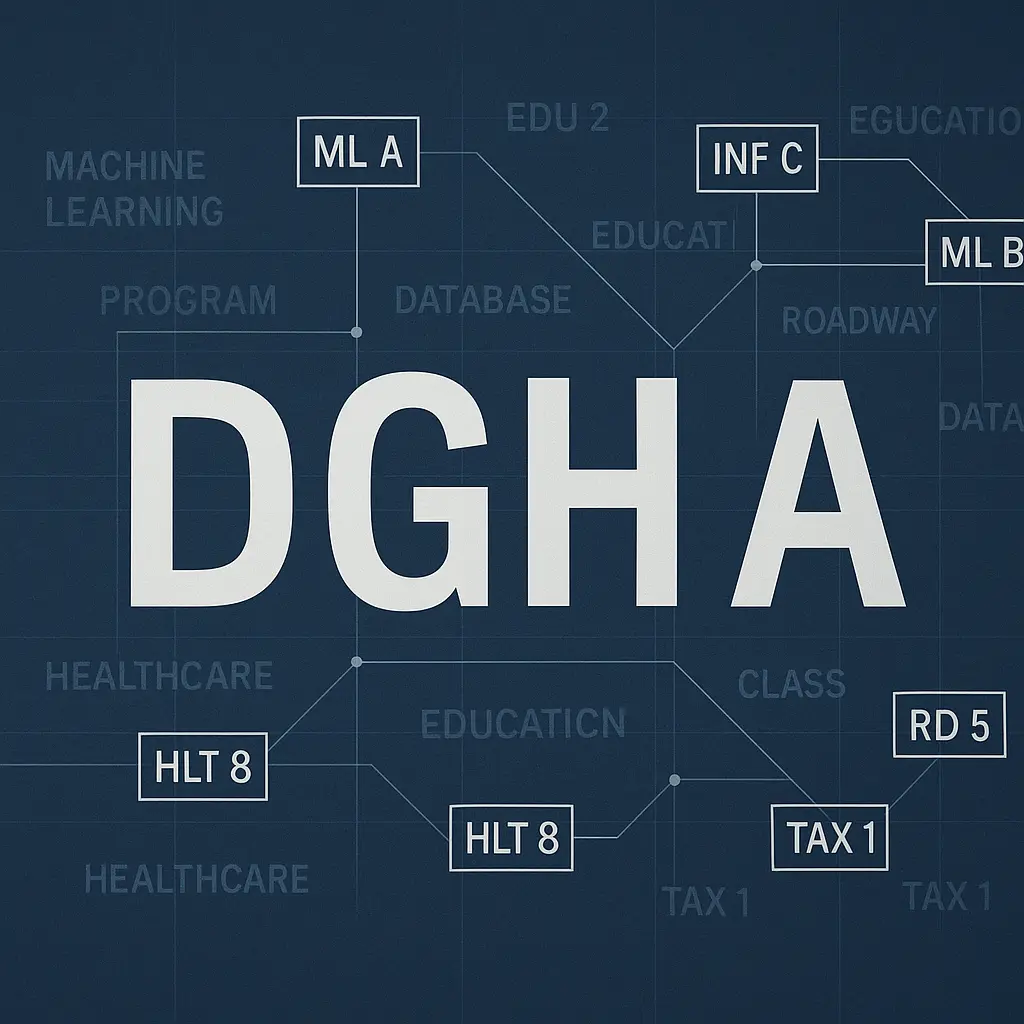
At its most literal, “DGH A” could be interpreted as an acronym—perhaps “District General Hospital A,” a seemingly straightforward label for a regional medical facility. Yet depending on the context, DGH A can also serve as a data label, a curriculum stream, or an infrastructure class. It may be embedded in an electronic health record system, represent a designation in a tax ledger, or identify a node in a machine learning dataset.
Conceptually, DGH A is a shorthand: a machine-readable code designed for interoperability within and across institutional systems. These types of labels exist to reduce ambiguity, standardize nomenclature, and facilitate efficient data retrieval. They are not meant to be public-facing; their power lies in precision, not readability.
But herein lies the paradox: while DGH A is born from a desire for clarity, it often resides in a sea of ambiguity when stripped from its native context. Without access to the underlying schema, even professionals may misinterpret its meaning.
Why Codes Like DGH A Matter
Institutional codes are born out of necessity. As societies grew more complex, classification systems became essential for managing information overload. From the Dewey Decimal System to ICD-10 medical codes, the history of classification is one of trying to map reality into retrievable units.
Codes like DGH A are part of this lineage. They serve several purposes:
- Efficiency: Short codes speed up database queries and human communications.
- Standardization: Uniform coding structures enable interoperability across platforms.
- Version Control: Codes can evolve while maintaining backward compatibility through controlled vocabularies.
In practice, these identifiers are the backbone of digital governance. Every scanned barcode, patient file, or tax bracket label is part of a broader administrative taxonomy. In this schema, DGH A could easily mean different things in different systems—a feature, not a flaw, of modular classification.
Sectoral Use Cases
Healthcare: District General Hospital A and EHR Routing
In the realm of healthcare, “DGH A” commonly appears as a designation for a specific hospital within a regional network—say, District General Hospital A. Hospitals are often coded alphabetically or numerically to facilitate referral systems, resource allocation, and patient triage.
Consider the case of an Electronic Health Record (EHR) system that automatically routes patients based on their postal code. Here, “DGH A” could serve as the routing tag for a facility responsible for a particular catchment area. If a referring physician enters a patient address, the EHR might map that data to “DGH A,” flagging the appropriate hospital.
Education: Academic Streams and Program Codes
In educational administration, DGH A may surface as a code indicating an academic stream or tier—for instance, “Degree General Humanities A.” Used internally, it helps institutions track enrollment patterns, course dependencies, and curricular frameworks.
A university registrar’s database might list a student under “DGH A,” signaling that they are enrolled in a non-honors general humanities track. While opaque to outsiders, this code structures everything from tuition fees to eligibility for scholarships.
Government Infrastructure: Roadworks and Budget Lines
Infrastructure planning is another domain where coded systems thrive. A municipality’s public works database might include “DGH A” as a label in its infrastructure classification, designating a specific road repair initiative under a certain budget cycle.
Here, “DGH A” might be shorthand for “Development Grant Highway A,” a project line item buried in a spreadsheet used by civil engineers and auditors. The code helps trace expenditures, track project milestones, and integrate geographic data.
Machine Learning & Data Architecture: Tags and Feature IDs
In AI and data science, classification codes like DGH A are indispensable. In training datasets, especially for supervised learning models, each entry must be tagged for the algorithm to learn meaningful patterns.
“DGH A” could represent a label in a medical image dataset—say, a radiological scan from District General Hospital A. The machine learning model might associate outcomes or anomalies with the source institution, using “DGH A” as a feature identifier.
Alternatively, DGH A might serve as a feature tag in a complex data labeling system, representing a normalized variable in a tabular dataset. In both cases, the code underpins model accuracy, dataset lineage, and interpretability.
Hypothetical Case Studies
Case 1: Misrouted Ambulance Due to Code Misinterpretation
In a regional hospital network, paramedics receive digital instructions to transport a stroke victim to “DGH A.” Due to a recent administrative restructuring, “DGH A” now refers to a hospital located an additional 12 kilometers away from its previous location. The paramedics, unaware of the update, take the patient to the wrong facility, delaying critical treatment.
The miscommunication stems from a legacy coding structure not yet updated in the ambulance dispatch software. The error could have been avoided through metadata enrichment that linked “DGH A” to real-time location data.
Case 2: Academic Misclassification of International Students
At a large public university, an international student applies to the “General Humanities” program, which is internally coded as “DGH A.” Due to a clerical oversight, the admissions office misclassifies the student under “DGH B,” a separate honors stream requiring different prerequisites.
The student is later told their admission is conditional upon advanced coursework they never agreed to. The error triggers an appeal process, highlighting the fragility of relying on undocumented or poorly understood code systems.
Case 3: Machine Learning Bias in Dataset Labeling
A research group trains an AI model to predict hospital readmission rates using historical EHR data. Each record includes a facility code, such as “DGH A.” The model performs well, but a subsequent audit reveals that “DGH A” was used inconsistently over time—at one point representing a high-resource hospital, and later, a low-resource one.
This labeling ambiguity skews the model’s predictions, introducing systemic bias. The issue underscores the importance of ontological transparency in dataset construction.
The Problem with Institutional Code Ambiguity
The deeper problem with codes like DGH A is that they often exist without public documentation or universal standards. Context determines meaning, but context isn’t always accessible.
Such ambiguity breeds errors. In classification systems, even small mismatches in schema interpretation can lead to significant administrative or operational failures. A mistyped code might misroute a payment, misclassify a patient, or misinform a policy.
Legacy systems exacerbate the problem. Older codes persist due to backward compatibility or institutional inertia, even when they no longer reflect current realities. When newer employees or third-party vendors encounter these codes, confusion ensues.
The Persistence of Codes Like DGH A
Why do institutions cling to opaque coding structures like DGH A? The answer lies in the tradeoff between machine efficiency and human readability.
Machine-readable codes are compact, standardized, and easy to process at scale. They excel in systems designed for automation and bulk data handling. Introducing more descriptive, human-friendly formats would increase storage needs, reduce processing speed, and risk inconsistency.
Moreover, institutional cultures develop around these codes. Staff become fluent in them, processes are built on them, and databases hardcode them. Replacing them isn’t just a technical task; it’s an organizational upheaval.
The Future of Code Transparency
The future offers hope through technological and conceptual advances. AI explainability frameworks, for instance, are increasingly emphasizing the traceability of data inputs—including classification codes like DGH A.
Metadata enrichment can allow codes to carry embedded descriptors, making them more interpretable without sacrificing compactness. Ontology mapping, a technique from semantic web research, can also link codes to formal definitions, enabling machines (and humans) to query their meaning dynamically.
Semantic search engines are beginning to recognize codes as entities, rather than just strings of text. This shift could allow users to hover over “DGH A” and receive a full explanation, drawn from structured knowledge graphs.
Cultural & Linguistic Implications
Codes like DGH A are part of what we might call “institutional dialects.” They emerge organically, evolve over time, and carry meaning that transcends their literal content. In some cases, they even become markers of belonging—to know what DGH A means in a given context is to be part of the in-group.
These codes also reflect how language and bureaucracy intertwine. Just as slang evolves in spoken language, administrative codes morph within institutions. What begins as “District General Hospital A” might become “DGH Alpha” in a future system, with different connotations.
Understanding these linguistic evolutions is critical, especially as more institutional interactions become digitized and globalized. Misalignments in code interpretation can lead not only to administrative failures but also to cross-cultural misunderstandings.
Conclusion: Making the Invisible Visible
In the quiet corners of digital systems, codes like DGH A do vital work. They route patients, classify students, organize infrastructure, and power algorithms. They are the unseen gears of institutional machinery.
Yet their very invisibility can be a problem. When codes are misunderstood, undocumented, or misapplied, the consequences ripple outward—sometimes subtly, sometimes catastrophically.
Understanding DGH A is not just an exercise in semantics; it’s a step toward greater institutional literacy. In an age where algorithms increasingly make decisions, we owe it to ourselves to comprehend the syntax that governs them. After all, what we don’t see can still shape our lives.
FAQs About DGH A
What does DGH A stand for?
DGH A commonly stands for “District General Hospital A,” but its meaning varies depending on institutional context.
Is DGH A used in healthcare only?
No, DGH A also appears in education, infrastructure, and data systems as a machine-readable code.
Why are codes like DGH A not publicly documented?
Many are legacy codes or internal tags not intended for public use, which can lead to ambiguity.
Can AI systems understand what DGH A means?
Only if DGH A is defined in metadata or ontological frameworks; otherwise, AI treats it as a string.
What happens if DGH A is misinterpreted?
Misinterpretation can lead to administrative errors, such as misrouted services or flawed machine learning outcomes.
Is there a move to replace codes like DGH A?
Not necessarily replace, but there is growing interest in enriching such codes with more descriptive metadata.